Hebei Port Group's Four-Year Anniversary of Restructuring and Development | Accelerating the Transformation into a Comprehensive Ocean Economy Service Provider, Courageously Leading the Way for Coastal Economic Rise
Waves surge in Bohai Sea, chasing the deep blue.
On October 30, 2026, Hebei Port Group celebrates the fourth anniversary of its establishment and restructuring.
Over the past four years, Hebei Port Group has adhered to its mission, resolutely implementing the decisions of the Hebei Provincial Party Committee and Government, continuously promoting port transformation, upgrading, and resource integration, optimizing port functional layouts. Through structural optimization, it drives transformation, and through continuous innovation, it drives upgrading. It firmly shoulders the responsibility of ensuring national energy and resource transportation security, steadfastly pursuing development in “port + container + shipping + port-shipping services + coastal industries.” It accelerates the creation of a digitized, green, technology-led port group, striving to lead the way in establishing a coastal economic rise belt.
In four years of prosperous progress, the cargo throughput of Hebei ports has continuously grown, ranking third among major coastal port groups nationwide. 400,000-ton ships regularly dock fully loaded, and the “6+N” coordinated energy transport guarantee system operates steadily. World-class energy raw materials port clusters show professionalism and efficiency, providing robust support. The shipping network grows denser, while inland dry ports layout continues improving, building a modern logistics network characterized by “land-sea internal-external linkage, dual-directional coordination between east and west.” The functional and geographical advantages of the ports are transitioning swiftly into industrial, trading, and economic advantages.
Standing at the starting point of the 15th Five-Year Plan, Hebei Port Group's Party Secretary and Chairman Cao Ziyu emphasizes accelerating the construction of multifunctional, comprehensive, and modern large-scale ports, transitioning from transportation hubs to integrated trade hubs, and upgrading port-channel economies into resource allocation platforms.
New era, new journey — Hebei Port Group navigates the blue sea, thriving towards prosperity.
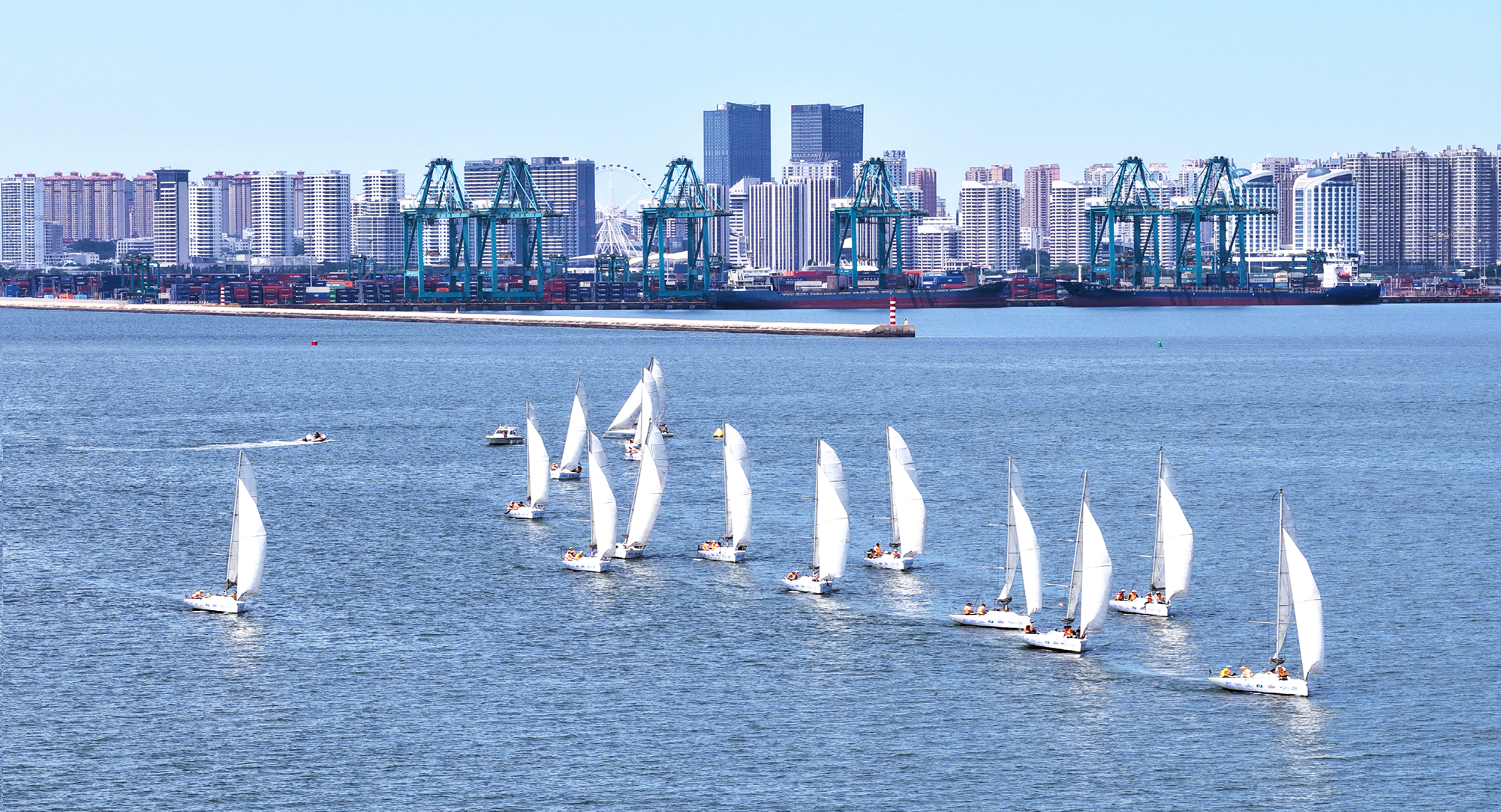
Enhancing Levels and Functions: A Modern Large Port Accelerates Its Rise
Bulk dry cargo transport is vital to the national economy, livelihood, and the security of energy and raw materials, forming a critical cornerstone for stable economic operations. Over four years, Hebei Port Group has promoted coordinated integration of coal and ore transport in the "Three Ports and Four Areas." Simultaneously, it has upgraded berths and implemented key projects systematically, enhancing comprehensive port service capabilities to strengthen the resilience of the energy and raw materials supply chain.
On May 17, the vessel "Vision Sea" smoothly berthed at the third-phase berth 5 of the iron ore terminal in Caofeidian Port Area, under Hebei Port Group. "With the support of the Laotieshan Channel—Tangshan Port’s deepwater route in Caofeidian Port Area (southern line), 400,000-ton ships can sail directly to the port without reducing loads," explains Mao Yixiang, Deputy General Manager of Hebei Port Group Caofeidian Ore Terminal Co., Ltd. Large ships can dock seamlessly while large ports can accommodate them fully. The third phase is the only deepwater terminal in Bohai Bay capable of handling 400,000-ton ships. The expansion project currently underway will allow concurrent docking of two such vessels, increasing annual throughput capacity to 37 million tons. The static storage capacity of the Caofeidian ore storage and logistics project behind the terminal is 3 million tons, with functions such as ore reserve and screening, providing sufficient storage and turnover space for handling 400,000-ton carriers. This creates a full logistics chain integrating "route-terminal-storage and logistics," driving the overall enhancement of port service capabilities.
The hardware upgrade of terminals is advancing rapidly. Phase 1 expansion of the ore terminal in Huanghua Port's bulk cargo area starts successfully, while construction of the 300,000-ton crude oil terminal progresses steadily, providing key support for developing multifunctional, comprehensive, and modern large-scale ports. The 250,000-ton channel in Jingtang Port Area becomes navigable, with rapid construction of the first 300,000-ton bulk cargo berth. Meanwhile, bulk berths 51 and 52 are upgraded into larger, deepwater terminals. Qinhuangdao Port transforms into China's first "five-star" green port area. Specialized grain transport tunnels connect berth 304 in East Port Area to the rear grain silos, while berths 22 and 23 in the West Port Area undergo grain-adaptation upgrades. These developments optimize grain storage and logistics layouts, enabling grain imports to go "directly from ship to silo," integrating port, production, and city deeply.
Port software functionality undergoes quality-enhancing iterations. Coal transport operations see multi-port coordinated interactions with shared resources and interconnected information, efficiently adjusting transport capacity. Digitized, green technology is driving bulk cargo management from "passive response" to "proactive prediction," transforming scheduling from "experience-driven" to "data-driven decision-making."
Hebei Port Group has independently developed China's first industry model for thermal coal within the national port domain, breaking information barriers across the mining, rail, port, shipping, and power sectors. It stands as a model for intelligent operations of bulk cargo nationwide. The "comprehensive smart control and integrated dispatching technology for large-scale hub bulk cargo terminals" research project has reached international leading standards. Qinhuangdao Port Phase V Coal Terminal became China's first bulk cargo terminal to pass on-site "four-star smart port" certification. Additionally, three other terminals achieved the same four-star rating. Digitized transformation ensures increasingly efficient and safe transportation of energy and raw materials.
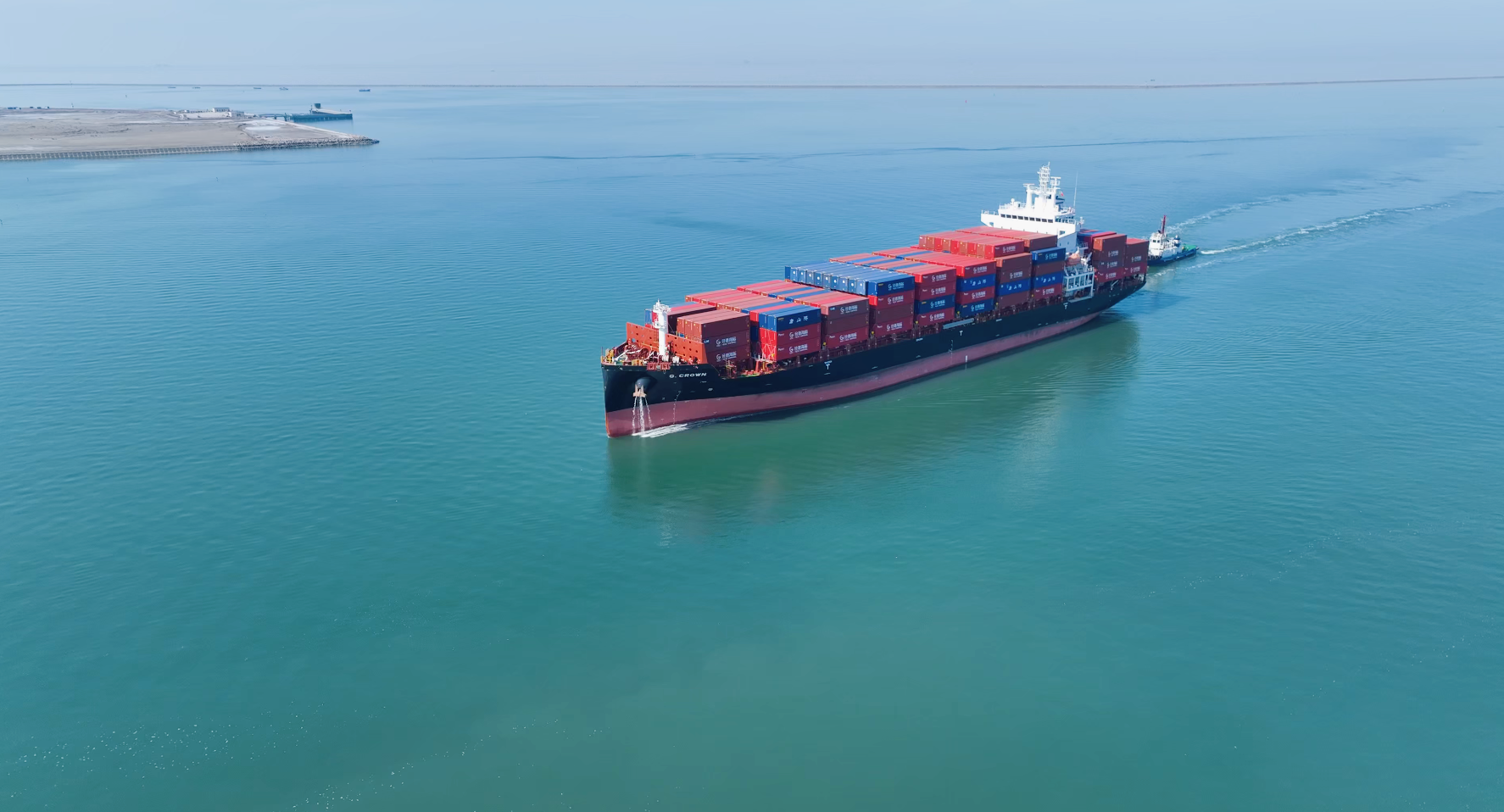
Fostering Networks and Industries: Integrated Trade Hub Displays Effectiveness
Ports connect oceans externally and hinterlands internally, serving as crucial nodes in facilitating domestic and international circulation. They also act as carriers for aggregating coastal industrial resources and driving regional economic development. Hebei Port Group vigorously develops the container business, continuously densifies domestic and international trade routes, improves the multimodal transport system, gathers resource elements, supports coastal industrial development, and accelerates the transition of ports from traditional transport hubs to integrated trade hubs.
On October 12, the vessel "Saint Shun 72" departed from the container terminal in Jingtang Port Area of Tangshan Port, heading to Ho Chi Minh Port in Vietnam. Haider Shipping Co., Ltd., which operates this Southeast Asian container route, has 53 container ships with a total carrying capacity of 77,000 TEUs, ranking 26th globally in liner shipping strength, progressing 22 spots compared to before the group integration. "These past few years, we have been optimizing layouts, enhancing services, and densifying schedules," explains Zhang Tiegang, General Manager of Haider Shipping Co., Ltd. The Southeast Asian routes now extend to ports such as Bangkok and Laem Chabang in Thailand, Hai Phong in Vietnam, and Jakarta in Indonesia. The innovative model of "domestic and foreign trade on the same ship + dual fixed foreign trade trunk schedules" has been adopted. Hebei Port ships schedule to Nansha Port every 1–2 days, and enterprises in areas such as Beijing-Tianjin-Hebei, Shanxi, Inner Mongolia, and Henan can complete full booking, loading, and shipping processes locally without rerouting to southern ports.
The intensive schedule of Southeast Asia routes is favored by regional enterprises, while the flagship "fast" routes to the US West Coast are 4–6 days faster than traditional options. During the consumer enthusiasm ignited by the 2026 FIFA World Cup in the US, Canadian, and Mexican markets, Hebei products rapidly reached overseas markets. "That period saw increased orders for sportswear, equipment, and football-related cultural products, including Hebei items like clothing from Suning," says Vice General Manager Shi Guanglei of Haider Shipping. With dedicated berths and preferential "ship-to-pickup" services at WBCT Terminal in Los Angeles Port, the “fast” feature significantly reduces comprehensive logistics costs, bolstering competitive advantages of Hebei products.
As routes become denser and channels expand, Hebei Port Group grows the hub function of ports, reaching 75 container routes covering major coastal ports in China and connecting to 23 ports in Northeast Asia, Southeast Asia, the Middle East, South Asia, and the US. The system forms an integrated route network balancing domestic and foreign trade, trunk and regional lines, and near-shore and far-sea connections. Increasing shipments now bring unique Hebei goods ranging from Pingxiang bicycles and Yongnian standard parts to Tangshan ceramics to international markets. These routes cover North China's 72 major industrial clusters and benefit Hebei's 58 clusters with over 680 types of goods.
During this expansion, the group extends Hebei's “port-to-sea outlet” deeper into inland regions. It organizes promotional events in Shanxi, Inner Mongolia, Ningxia, Xinjiang, and Shaanxi, establishing 80 inland ports, opening 30 sea-rail intermodal transport lines, and 13 international train routes. These initiatives create smooth logistics “superhighways,” attracting more cargo and production factors to Hebei ports.
Stable operations include Shanxi Antang Station to Tangshan Port to Guangxi Beibu Gulf sea-rail intermodal routes, "Xiaonan Station—Jingtang Port" heavy-load pendulum-class train transport services, and the first 10,000-ton Hami coal special train arriving at the port. This opens up a new rail-water transport channel for "Xinjiang coal entering Hebei," unlocking fresh pathways for "west coal transitioning eastward." Inland ports continue to thrive, such as Handan adding five train routes to cities like Chengdu, Kunming, and Guangzhou, increasing schedules to three trains weekly. Inland bonded operations create new logistics pathways for delivering supplies like those managed by Anhui Minmetals directly to Wuan. These efforts drive the economic linkage of provincial municipalities. "Xiongan New Area—Huanghua Port—Incheon, Korea" international logistics channel maintains smooth dispatches, implementing "Xiongan inspection, direct loading at port" initiatives. "Seamless transit containers" become the norm for Hebei Port's sea-rail intermodal system.
The advantageous transportation channels and traffic of the ports are rapidly being transformed into regional economic dividends as industrial and trading advantages. Teaming up with Hebei's Department of Commerce and Cangzhou City Government, the group establishes the North (Cangzhou) Cross-Border E-Commerce Logistics Base, designated as a trial unit by the General Administration of Customs for “pre-inspection before dispatch.” The bonded logistics center (Type B) in Cangzhou has officially commenced operations, attracting enterprises to engage in e-commerce trade and expanding global markets. The Huanghua Mineral Port develops new energy transport corridors like "Huanghua Port—Wuan—Changzhi" and "Huanghua Port—Xiaoyi," aggregating cooperation from nine logistics fleets and nearly 2,000 new energy heavy trucks. These corridors now exceed monthly dispatching thresholds of 200,000 tons, injecting strong momentum into industrial growth supporting coastal economic rise.
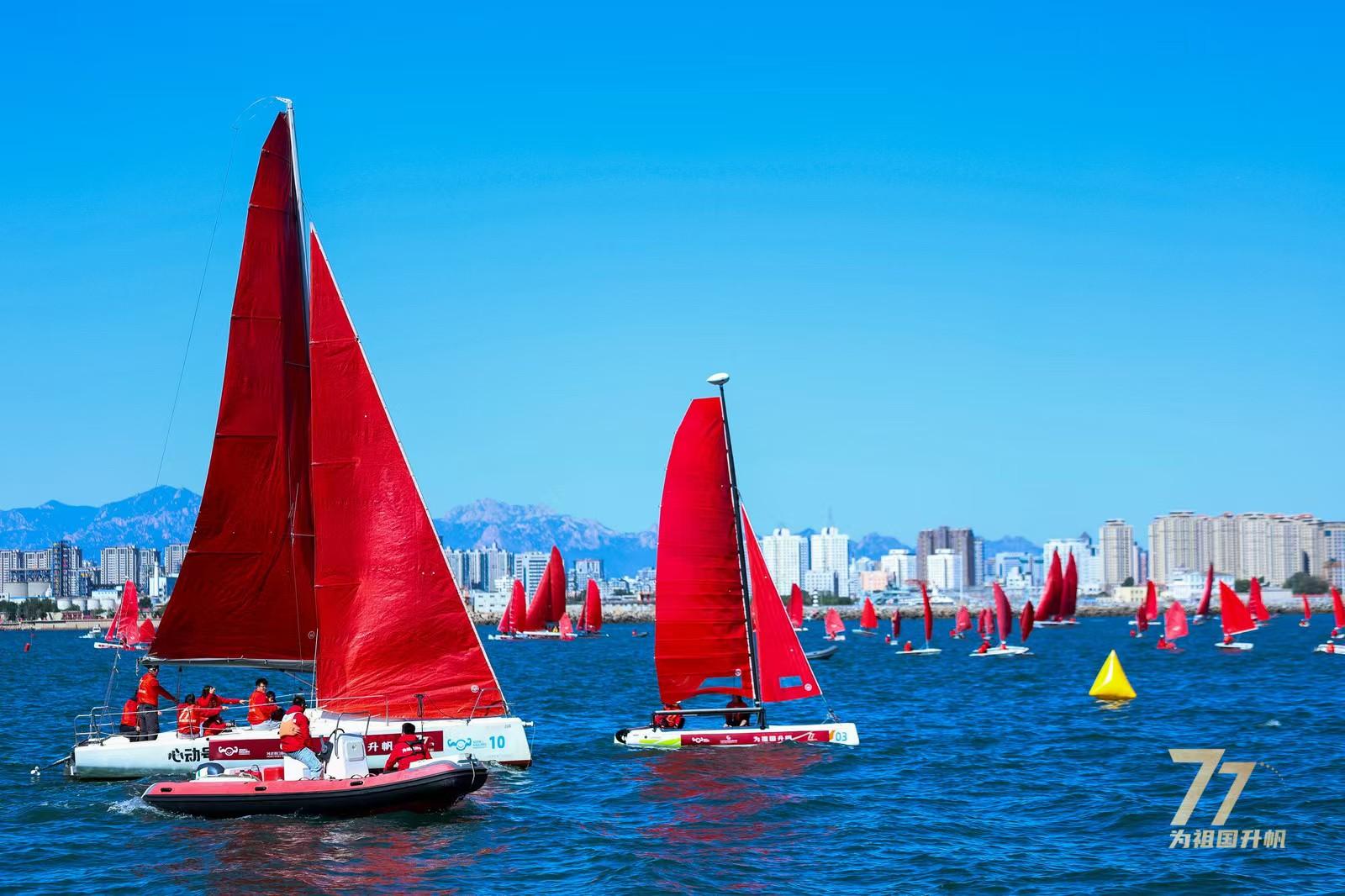
Extending Chains and Revitalizing Cities: Marine Economy Sparks “New Vitality”
Centuries-old port industrial coastline transformed into a city’s living room. At the Qinhuangdao International Tourism Port, old warehouses are now trendy coffee houses, cultural shops, and modern exhibition halls. Retired port equipment becomes marine tourism landmarks, and sailboats cruise elegantly—this area rich with coal transportation memories has been rejuvenated as a national 4A tourist attraction. The "Raise Sails for the Nation" sailing-themed brand activity is a leading cultural tourism brand and maritime IP. This year, the port received over 6.5 million visitors, attracting more than 50 businesses, and amplifying coastal consumption vitality while lifting regional cultural tourism industries.
Hebei Port Group actively develops maritime feature industries, creating the West Port Sailing Season brand event, regularly hosting Chinese Family Sailing Championship, Beijing-Tianjin-Hebei Sailing Invitational, National University Sailing Championship, and implementing Sailboat & Yacht Week. It builds a comprehensive maritime industry system integrating sailing competitions, training, and tourism. Visitors engage in a rich consumption chain of "watching races—immersive experience—long-term learning." During peak tourist seasons, the West Port International Sailing Center saw over 50,000 short-term training experiences, with approximately 5,400 summer training participants, significantly boosting nearby accommodations, food services, tourism, and retail revenues. The blue ocean enhances deeper integration of culture, sports, and consumption development.
Leveraging port resources and Tangshan's industrial strengths, Jingtang Port Area's bonded logistics center (Type B) maximizes potential business scenarios while refining bulk commodity warehousing services. It expands functions of blending, processing, distribution, and trading the full range of chains: with copper ore mixing as the core business alongside expanding bonded coal and steel warehousing and parallel imported vehicles and cross-border e-commerce. For the first three quarters of this year, bonded logistics services at this center totaled over 20 billion RMB in trade, continuing to lead Hebei province and ranking second among similar national bonded logistics centers, further strengthening its identity as a Bohai commodity hub.
Hebei Port Group moves beyond single-dock functions, pivoting towards serving cities and industries through ocean economies. It integrates harbor, industry, urban space, and the sea, ensuring blue coastlines flourish with vibrant energy.
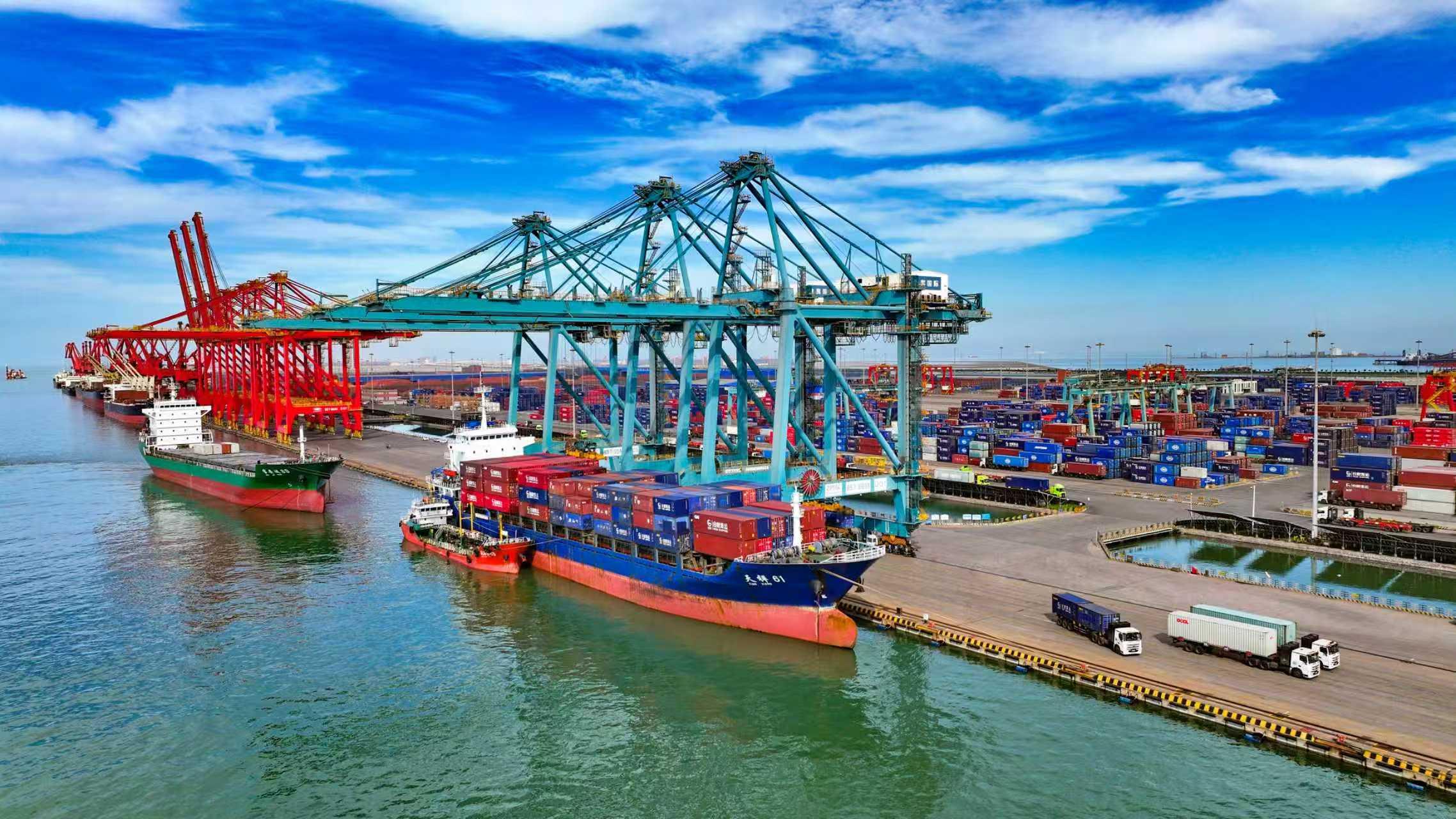
Strengthening Party Leadership: Empowering Development Through Red DNA
Insisting on Party leadership and strengthened Party-building has been a glorious tradition of China's state-owned enterprises. For Hebei Port Group, this “root” and “soul” are deeply intertwined with a 128-year port legacy. Generations of port workers have endlessly strived, embedding revolutionary genes in its bloodline—this forms a foundational spirit for this century-old enterprise.
Over four years of restructuring, the Group’s Party Committee fully integrates revolutionary DNA into Party leadership, corporate culture, and production operations, making it a spiritual cornerstone and source of strength for driving corporate development. With this ideology, it implements the "113553" Party-building system, establishing the “Glowing Together at Hebei Ports” branding leading a cluster of 44 subsidiary brands. Platforms such as coordinated Party-building projects, innovative workstations bridging "three-in-one" synergies, and tripartite joint Party arrangements allow for "Five Integrations" driving deep collaboration across the “Three Ports and Four Areas.” Comprehensive implementation of "Five Major Projects," it upgrades Party leadership work towards advancing a world-class harbor development initiative under exceptional governance.
Bringing historical revolutionary archives "to life," showcasing "bright" red spirit, and propagating revolutionary narratives. On December 30, 2025, Hebei Port Group inaugurated China's first Red Gene Heritage Research Association for state-owned enterprises. Innovative platforms for theoretical studies, publications, and publicized achievements deliver deeper exploration of symbolic revolutionary traditions reflected within modern contexts. Works like "Red Anchors" and "Red Sails" series, along with updated records like “Qinhuangdao Port History (1978–2022),” ensure archival and verifiable legacy of red narratives. On June 17, the Red Gene Inheritance Exhibition Hall launched at the International Tourism Port in Qinhuangdao showcases its century-spanning history intertwined with national and Party commitments.
On July 1, the Party Committee of the Group's subsidiary Caogang Co., Ltd. was awarded the "National Advanced Grassroots Party Organization" commendation. This prestigious national recognition by the Party and provincial-tier governments celebrates the outstanding success of their Party's red leadership in shaping world-class ports over four years. With 100 advanced grassroots Party organizations and 164 exemplary Party members cultivated, these red bastions empower docks at the "Three Ports and Four Areas," translating Party leadership into real-world advantages for growth and competition.
Corporate culture embodies red DNA and delivers Party leadership through routine operations. Drawing inspiration from a port legacy of determined supply chains handling constant country-serving growth dynamics, its enterprise culture implements core frameworks influencing collective cohesion strategically. National pride campaigns such as "Thoughtfully Combined Energy—Advancing Hebei Ports Spiritually" go region-wide, shaping workplace customs of unified energy around duty-driven, innovate-ready staffs determined with disciplined loyalty and exceptional determination. Collective hymn pieces like “Forward Towards Maritime Strength—Hebei Ports Song” alongside serialized displays sustaining narratives from engineering "Heart and Soul Hebei Ports' Craftsmanship" exhibit practical port worker daily practices brilliantly converting red ingenuity into long-lasting impactful advantages.
With waves rising amid Bohai coasts hosting competitive potential among unlimited possibilities, Hebei Ports Group stands determined at ambitious “Five-Year Goals,” promising stronger systems equipping ports sustaining holistic industrial-financial channel logistics developments, industries eco-seizing sea-based global opportunity anchors.
-
Hebei Port Group's Four-Year Anniversary of Restructuring and Development | Accelerating the Transformation into a Comprehensive Ocean Economy Service Provider, Courageously Leading the Way for Coastal Economic Rise 4949
-
From the Ancient Canal Route to Navigable Access to the Sea — Exploring the Revival Path of Shaanxi's Waterway Transport3057
-
Dedicated windows accelerate the flow, comprehensive controls safeguard safety—Pudong Maritime Bureau precisely escorts the 9th CIIE.3627
-
A 2-megawatt multi-energy land-based commissioning and testing platform established in Wuhan.4066
-
China Communications Construction Mechanical & Electrical Bureau creates a smart digital commodity storage and transportation hub in the Bohai Sea Rim.3956