Guangdong maritime three-dimensional linkage escort 32000 fishing boats concentrated out of port
At 12:00 on August 16, the three-and-a-half-month South China Sea summer fishing moratorium ended, and 32,000 fishing boats from Guangdong set out from fishing ports such as Zhaopo, Bohe, and Yun'ao.
On the same day, the Guangdong Maritime Safety Administration, in collaboration with the Guangxi Maritime Safety Administration, Hainan Maritime Safety Administration, Shenzhen Maritime Safety Administration, and Guangdong Provincial Comprehensive Marine Law Enforcement Corps, as well as the South China Sea Navigation Support Center of the Ministry of Transport, launched the "2026 Escort Fishing Action." Using a "sea-land-air" integrated escort model, they worked to ensure smooth and safe maritime traffic during the fishing season.
Four Regions Collaborate for Seamless Maritime Supervision
With South China Sea fishing boats operating across maritime zones and moving between provinces, escort and protection efforts must transcend jurisdictional boundaries. This year, maritime authorities from the four regions jointly developed an implementation plan for the South China Sea escort fishing action, standardizing the timeline, key areas, and resource deployment.
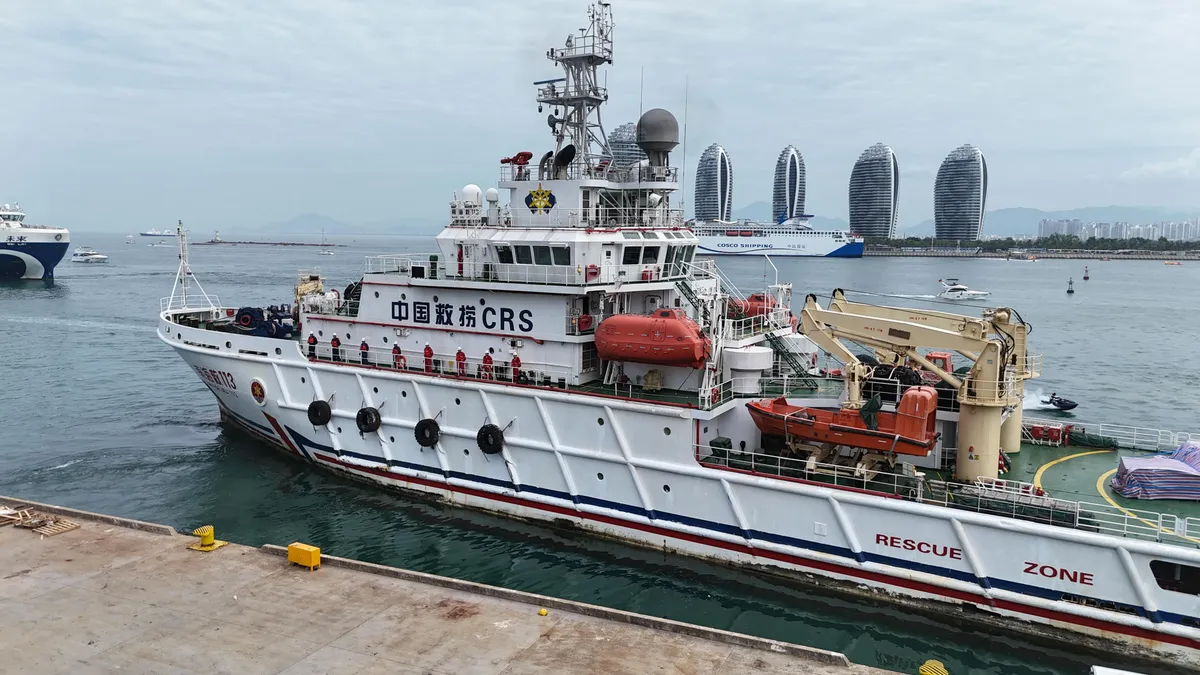
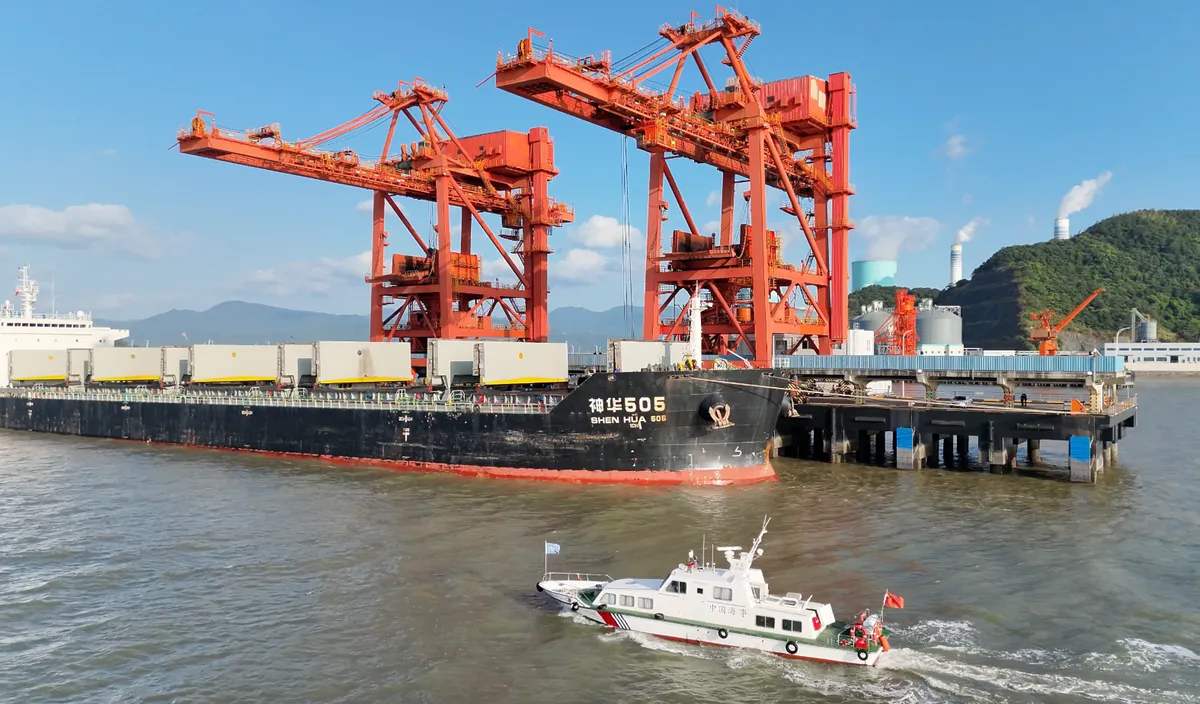
On the opening day of the fishing season, enforcement vessels acted in unison. The "Haixun 09" patrolled from the western Guangdong sea area along the Guangdong coastal route to the northern South China Sea fishing grounds and the Pearl River Estuary. The "Haixun 03" was stationed at the eastern entrance of the Qiongzhou Strait, the "Haixun 1001" was deployed to the anchorage outside Qinzhou Port, and the "Deep Sea 01" escorted in the waters of Daya Bay and Dapeng Bay. A total of 42 medium and large maritime patrol vessels, 15 drones, and 132 law enforcement personnel were coordinated by the four maritime authorities to patrol and guard key sea areas such as the Guangdong coastal route, northern South China Sea fishing grounds, and Qiongzhou Strait.
From 19:00 on the 16th to 5:00 on the 17th, vessels coordinated with the Zhanjiang, Beibu Gulf, and Qiongzhou Strait Vessel Traffic Management Centers to conduct cross-regional joint traffic organization, maintaining uninterrupted VHF monitoring. "The risk of collisions between commercial and fishing vessels during the fishing season is regional, and prevention must also be regional," said a relevant official from the Guangdong Maritime Safety Administration. The maritime authorities of the four regions acted according to the same plan and timeline, achieving seamless maritime supervision.
Passenger Ferries Halt Operations to Allow Safe Passage for Over 5,000 Fishing Boats
The Qiongzhou Strait is a vital route for fishing boats from the Beibu Gulf heading out to sea and serves as a critical channel for over 90% of Hainan's production and daily supplies, as well as all vehicle transportation to and from the island. On the opening day of the fishing season, a large number of fishing boats passed through the Qiongzhou Strait, overlapping with passenger ferry routes.
To balance the safety of passenger ferries and the concentrated departure of fishing boats, the Guangdong Maritime Safety Administration, in coordination with the Hainan Maritime Safety Administration, worked with management departments on both sides of the Qiongzhou Strait to implement temporary traffic control. From 17:00 on August 16 to 5:30 the next day, passenger ferries in the Qiongzhou Strait were suspended to allow safe passage for over 5,000 fishing boats. This marks the fifth consecutive year that passenger ferries in the Qiongzhou Strait have halted operations during the fishing season to give way to fishing boats.
"The temporary suspension aims to ensure the safe and concentrated passage of fishing boats within the designated time while minimizing the impact on cross-strait passengers and vehicles," said a relevant official from the Guangdong Maritime Safety Administration. The suspension has provided fishermen from Guangdong, Guangxi, and Hainan with a greater sense of security and satisfaction.
Focusing on "Commercial-Fishing Co-Management" with Escort Operations in 65 Key Areas
While strict control is maintained over maritime zones, escort and protection in port areas are equally critical. The Guangdong Maritime Safety Administration coordinated with the South China Sea Navigation Support Center and the Guangdong Provincial Comprehensive Marine Law Enforcement Corps to deploy 40 enforcement vessels, 136 law enforcement personnel, and 5 drones to implement escort operations in 65 key areas, including main channels in and out of fishing ports, upstream and downstream of bridge areas, and ship anchorages, ensuring comprehensive supervision of both port and maritime zones.
In terms of information support, the Guangdong Maritime Safety Administration, in collaboration with the South China Sea Navigation Support Center, utilized three years of ship big data to accurately assess the navigation situation during the fishing season. They continuously collected and organized maritime traffic management rules for coastal public routes, conducted standardized data conversion and maintenance, and synchronized the services to the "Maritime Connect" App's navigation rules module.
Additionally, collaboration between maritime and agricultural departments was maintained throughout the process. Before the fishing season, maritime and agricultural departments jointly developed plans and conducted collision prevention education for commercial and fishing vessels. After the fishing season began, they relied on the "Commercial-Fishing Vessel Joint Management Center" to carry out joint patrols, joint stationing, and joint law enforcement, inspecting and verifying the watchkeeping status of commercial and fishing vessels, and sharing safety information in real-time.
It is reported that the "2026 Escort Fishing Action" will continue until August 22. Afterward, the enforcement vessels involved in the operation will transition to routine monitoring to prevent collisions between commercial and fishing vessels. From segmented defense to regional collaboration, and from single-department operations to multi-department joint governance, the practices formed during this operation—such as cross-provincial unified scheduling, joint law enforcement across departments, and passenger ferry suspensions to allow fishing boats to pass—provide a replicable model for ensuring maritime traffic safety during the national fishing season.
-
Year-on-year growth of 52.7%! Taicang Port's shipment of energy storage containers surpasses 10,000 natural containers.4526
-
Ningbo Maritime Authorities Fully Respond to the Peak of Waterway Travel During the National Day Holiday4341
-
Fuzhou Aids to Navigation Office Implements Multiple Measures to Safeguard Maritime Navigation Safety3852
-
Nanjing Maritime Authority Escorts the Regular Operation of the "Nanjing-Middle East" Ro-Ro Liner Route3383
-
"Lianyungang-Ho Chi Minh" Point-to-Point Direct Foreign Trade Shipping Route Launched4730